
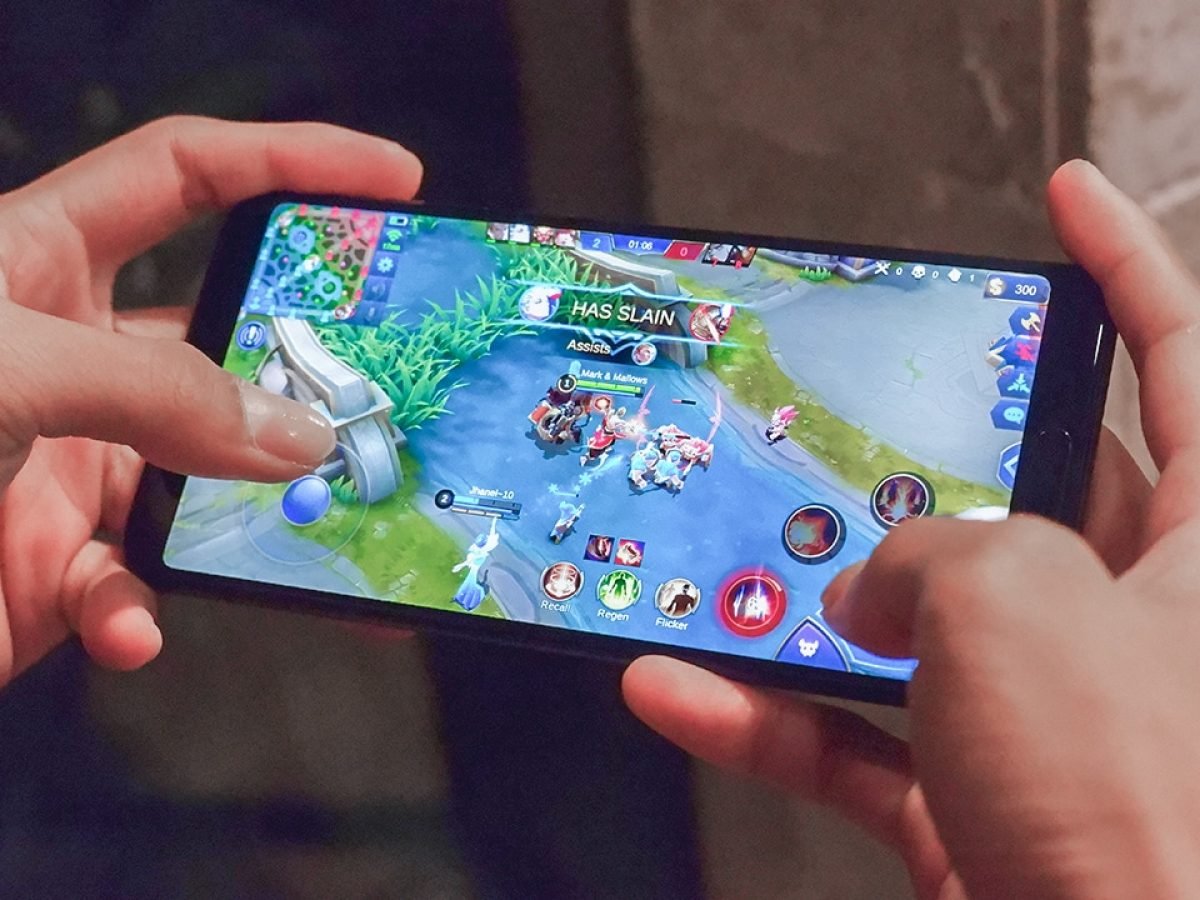
Competitive games reward decisions. A BGMI player improves positioning, recoil control, rotations, and timing. A Free Fire player learns when to take a fight, when to disengage, and how to coordinate with a squad. Better decisions do not guarantee victory in every match, but they raise the player’s level over time.
Other online games ask the player to choose a color, number, symbol, or short-term outcome before revealing a result generated behind the interface. These games may use scoreboards, countdowns, prediction language, and performance histories. Those features can make the activity feel strategic even when the player’s decision has little or no effect on what happens next.
The distinction matters most when money or prizes are involved. A player who mistakes randomness for skill may treat a winning streak as proof of improvement, increase spending, and keep playing after the streak ends. The safest way to judge a game is to ignore its theme and examine how actions connect to outcomes.
Look for Decisions That Can Repeatedly Change the Result
A genuine skill game gives the player meaningful choices before and during play. Those choices influence the result in ways that can be studied and repeated. The player receives feedback, adjusts, and becomes more consistent.
In a shooter, movement, aim, map knowledge, and team communication affect survival. In a racing game, braking points and racing lines affect lap time. In a strategy title, resource management and planning affect the position reached later in the match. A strong opponent can still win, and an unexpected event can still change a round, but the player’s decisions remain part of the causal chain.
Improvement is therefore visible in more than a single win. The player begins to make fewer mistakes. Scores become more stable. Similar situations produce better responses. Performance against comparable opponents improves across many matches rather than jumping randomly from one extreme to another.
A learning curve is one useful sign. New players usually perform worse than experienced players under equal conditions. Practice narrows specific weaknesses, such as slow reactions, poor positioning, or inefficient resource use. If the game records detailed statistics, those figures should connect to actions the player can change.
K/D ratio provides a familiar esports example. It is not a complete measure of ability, but it reflects events inside the match. A player can review unnecessary deaths, weak engagements, and missed shots. Training can improve the underlying actions that affect the ratio. The statistic has a feedback function.
Now compare that process with selecting one of several options before an unseen result appears. If the player cannot observe the system, change the way the round develops, or apply a repeatable technique, the choice may be an input without meaningful control. Selecting red instead of green is an action, but an action is not automatically a skill.
Ask what an expert does differently. A genuine expert should be able to describe specific decisions and demonstrate them under controlled conditions. In a football game, that might include formation changes, passing lanes, and defensive positioning. In a puzzle game, it might involve pattern recognition and move efficiency. The explanation should connect directly to better performance.
Claims such as “watch the trend,” “follow the last result,” or “play when the timer feels right” do not establish skill. They need a mechanism showing why the action changes the next outcome. Without that mechanism, the player may be describing a pattern that appeared by chance.
Games can contain both skill and randomness. Random loot, card order, spawn points, or weather may influence a match while players still make important decisions. The practical question is whether stronger decisions reliably improve performance across repeated play. If the random element overwhelms those decisions, calling the activity skill-based can create a false sense of control.
The opponent also matters. In many competitive games, players begin under similar rules and try to outperform one another. The result comes from their relative decisions, although matchmaking quality can affect fairness. In a random-outcome game, the player may be responding to a result generated by the platform rather than competing against another person’s performance.
One fast test is to remove the graphics and sports language. Describe the game in plain terms. Does the player aim, plan, solve, remember, react, or allocate resources? Or does the player choose an option and wait for a concealed result? The second model may be entertaining, but it should not be confused with the type of trainable control seen in esports.
Check How the Outcome Is Generated
The rules page should explain how a round is decided. If the explanation is vague, marketing language can fill the gap with words such as prediction, strategy, challenge, or performance. Those words describe how the game feels, not necessarily how its result is produced.
A reader following a DM FIRST GAME guide may encounter several categories grouped under one label. Each title still needs to be judged by its own mechanics. A sports-themed prediction round, a card game, a slot-style title, and a player-versus-player contest can use different outcome systems even when they share one wallet or lobby.
Start by asking whether the result is created before, during, or after the player’s action. In an arcade game, the result develops while the player controls the character. In a turn-based strategy game, each decision changes the next available position. In a random-number game, the system can generate the result independently and then compare it with the option the player selected.
Random number generation is not visible from the animation. A spinning wheel, bouncing ball, card reveal, or changing color can be a visual presentation of a result produced elsewhere. The length of the animation and the point at which the player taps the screen may have no effect unless the published rules say otherwise and the system can be independently verified.
Look at whether identical decisions can lead to unrelated results. In a skill game, executing the same action under similar conditions should produce a broadly similar effect. The shot may miss because an opponent moves, but the relationship between aim and accuracy remains understandable. In a chance-driven round, the same selection can win once and lose the next time without any change in player performance.
Past-result panels require special care. A sequence such as red, red, green, red can look meaningful because people naturally search for patterns. If rounds are independent, however, the previous color does not force the next one to change or repeat. A history board records what happened. It does not prove that the next outcome can be predicted.
Short streaks occur naturally in random sequences. Five wins may feel like evidence that a method works. Five losses may feel like evidence that a win is due. Neither conclusion follows unless the game has a disclosed dependency between rounds. The appearance of balance over a long period does not mean a short sequence must correct itself immediately.
Payout design offers another clue. If a player chooses from several outcomes and the platform publishes different returns for each option, ask how those returns relate to probability. A lower payout for a more frequent outcome and a higher payout for a rarer outcome suggest that the platform is pricing uncertainty. The displayed reward does not tell the player how to predict the event.
Check who pays the prize. In a direct skill contest, participants may pay entry fees and compete for a pool, while the platform takes a disclosed service fee. In another model, the operator accepts each selection and pays according to a fixed table. These structures create different incentives and risks. A peer-to-peer label alone is also insufficient if opponents are not matched fairly or the scoring process is unclear.
The server’s role should be transparent enough to understand. Does it merely record player inputs, or does it generate the decisive event? Can the player inspect rules before joining? Is there an independent fairness test, audit, or clear description of the system? A claim such as “100% fair” is weaker than a verifiable explanation.
Do not infer legal status from the word skill. Different jurisdictions apply different tests, and some treat games containing any meaningful chance differently from games dominated by skill. A game’s availability in an app or browser does not establish that it is permitted where every user lives.
The useful conclusion is mechanical rather than legal: identify what creates the result, determine which player actions can change it, and separate visible animation from the decision process happening on the server.
Test a Skill Claim Without Risking Money
If a game offers a free or practice mode, use that version to examine the skill claim. The aim is not to develop a system for earning money. It is to see whether better decisions produce more consistent performance under comparable conditions.
Begin with the rules. Write down what the game says the player can control. In a sports game, this may include shot timing, passing, formations, or player selection. In a puzzle, it may include move order and speed. If the only stated action is choosing an outcome before a timer ends, there may be little to test beyond the selection itself.
Keep the conditions as stable as possible. Use the same difficulty, device, control settings, and practice duration. Track a performance measure that reflects player action, such as score, accuracy, completion time, errors, or win rate against opponents of similar strength.
A meaningful test needs repeated sessions. One excellent result can be luck, and one poor result can come from distraction. Improvement should appear as a trend connected to specific changes in play. A player who practices aiming should be able to observe better accuracy. A player who learns a puzzle should solve it faster or with fewer moves.
The test is weaker when the only measurement is money won or lost. Payouts combine the game result with stake size and reward rules. They can hide whether the player actually became more skilled. In a free mode, focus on the underlying task rather than a simulated balance.
Compare players when possible. Give the same game to a beginner and an experienced player under equal conditions. If skill matters, the experienced player should tend to perform better across a sufficient number of trials. The beginner may win an individual round, but the difference should become clearer over time.
Now reverse the question. Can the player explain a loss in terms of a correctable action? “I moved too early,” “I chose the wrong route,” and “I used the resource at the wrong time” point to decisions that can be reviewed. “The next hidden color was different” does not reveal a trainable mistake unless the rules provide information that the player failed to use.
Do not pay to extend the experiment. A platform may describe deposits as the point where the real game begins, but a skill claim should be understandable without financial exposure. If free play uses different mechanics from paid play, that difference itself needs a clear explanation.
Avoid online prediction formulas and guaranteed methods. A long table of previous results can produce countless apparent patterns. Someone can always design a rule that fits yesterday’s sequence. The real test is whether the rule predicts new outcomes under the same conditions. Random systems tend to break those rules quickly.
Screenshots are especially weak evidence. They can show selected wins while hiding losses, altered stake sizes, bonus credits, or unsuccessful accounts. A creator who posts a successful session has not demonstrated a repeatable advantage. The full record matters, including losing periods and the amount placed at risk.
Stop the test if the platform demands sensitive permissions, asks for payment before showing basic rules, or directs users to an unofficial app file. Evaluating mechanics does not require surrendering contact lists, messages, one-time passwords, or banking credentials.
At the end, describe the game with one sentence: “Practice improves my performance because I can change X,” or “I select X, but the platform independently generates Y.” That sentence will often reveal more than the title, graphics, or promotional claims.
Treat Real-Money Features as a Separate Risk
A game can contain genuine skill and still expose players to financial loss. Entry fees, platform charges, stronger opponents, unstable internet, account rules, and withdrawal conditions all affect the experience. Demonstrating skill does not guarantee a profit.
Separate the entertainment decision from the mechanics test. Before using any real-money feature, confirm the minimum age and whether the activity is available in the player’s location. Rules can differ between countries and between states or provinces. A platform’s use of local currency or a local phone code does not settle the legal question.
Identify the operator, not just the guide, promoter, or download page. The operator is the entity that holds accounts, processes payments, sets game rules, and handles disputes. Its name, contact details, applicable terms, and licensing information where required should be available before money or identity documents are submitted.
Check the exact domain and distribution route. An unofficial app file can carry security risks unrelated to the game itself. Compare the hostname with the operator’s verified channels, inspect the permissions requested during installation, and avoid files forwarded through private messages.
Read the wallet rules before funding an account. Deposits and withdrawals may use different limits, identity checks, payment methods, or processing times. Bonus balances can have separate turnover requirements. A displayed balance is not the same as money that can be withdrawn immediately.
Set a fixed entertainment budget that can be lost without affecting food, housing, transport, bills, education, or debt payments. Decide the limit before play begins, when the decision is less influenced by a win or loss. Do not increase it to recover previous spending.
Time requires a limit as well. Rapid rounds compress many decisions into a short period, making it easy to lose track of both minutes and money. Use device alarms or platform controls rather than relying on the feeling that one more round will be the last.
Treat a win as an uncertain event, not income. Do not borrow, use essential funds, or plan future expenses around a possible payout. A skilled esports player can train toward measurable performance goals. A person facing random financial outcomes cannot turn confidence into certainty.
Account behavior can provide warning signs. Stop if play begins to interfere with sleep, work, study, or relationships. Hiding spending, chasing losses, increasing stakes to feel the same excitement, or feeling unable to pause are reasons to step away and seek confidential support.
Sports and esports fans understand that serious performance is built through review, practice, and measurable improvement. Apply the same standard to an online game. If the player cannot identify a decision that reliably changes future performance, the game should not be treated as a test of skill.
The label on the lobby is secondary. The decisive questions are simple: what does the player control, what does the server generate, and does practice create repeatable improvement? Answer those before attaching meaning, money, or confidence to the result.